Showing posts with label overload thermal relay. Show all posts

Friday, 8 September 2023

Working Principle of Thermal Overload Relay

When the temperature rises over a certain threshold, the relay trips. It opens the circuit and disconnects the damaged equipment. For instance, an electric motor may overheat as a result of an overload brought on by any of the following circumstances:

  • Excessive load
  • High-temperature outside
  • Mechanical attachment
  • Electricity supply issue


Working Principle of a Thermal Overload Relay

The amount of current flowing through the linked motor or circuit determines how the thermal overload relay operates. It is intended to simulate the heat produced by the appliance using this current to ascertain when an overload may result in damage.

Parts for Thermal Overload Relays

A thermal relay is made up of a variety of pieces, some of which are movable. The following are the primary components of a thermal overload relay that contribute to temperature sensing and the tripping action:


  • Temperature-sensing component: Usually, this is a bimetallic strip made of two strips of different metals. Depending on how much current is going through the strip or how hot the surroundings are, the strip will expand by a certain amount.
  • Tripping mechanism: This is the area of the relay that, when the temperature sensor element detects a sustained overload, trips off using levers and slides. Trip lever, contact lever, trip slide, and springs are some of the components.
  • Contacts: When a thermal overload relay is triggered, these component components open and shut to let current passage or interrupt it. The two sets of contacts on a standard thermal relay are generally closed on one set and open on the other. The contacts change positions in response to an overload to stop the current flow.

Operation of a Thermal Overload Relay

Based on the components we just covered, the overload thermal relay operates as follows.

  • The bimetal heating coil emits heat when electricity passes through it. A continuous overload might eventually cause the bimetallic strip to expand and bend, depending on the set rating.
  • This will exert pressure on the relay's trip lever, opening the usually closed connections while closing the typically open contacts. 
  •  The afflicted piece of equipment is decoupled from the power source as a result of the activity.

A tripping indication is set off to signal that the device has been unplugged when this occurs. The tripped relay can then be reset as needed or once the particular issue has been fixed.

Monday, 27 February 2023

Thermal Overload Relays: An Essential Protective Device for Electrical Systems

A thermal overload relay is a type of protective device that is used in electrical systems to protect against excessive current or heat that can cause damage or even pose a safety hazard. In this blog, we'll explore the basics of thermal overload relays, their applications, and how they work.


What is a Thermal Overload Relay?


A thermal overload relay is a type of relay that is designed to protect an electrical circuit from damage due to excessive current or heat. It works by monitoring the temperature of the electrical circuit and disconnecting the power supply if the temperature exceeds a predetermined level.


The thermal overload relay is made up of a bimetallic strip, which is composed of two different metals with different thermal expansion coefficients, which are welded together. When the strip is heated, the two metals expand at different rates, causing the strip to bend. This bending action is used to actuate a switch, which interrupts the flow of current to the circuit.


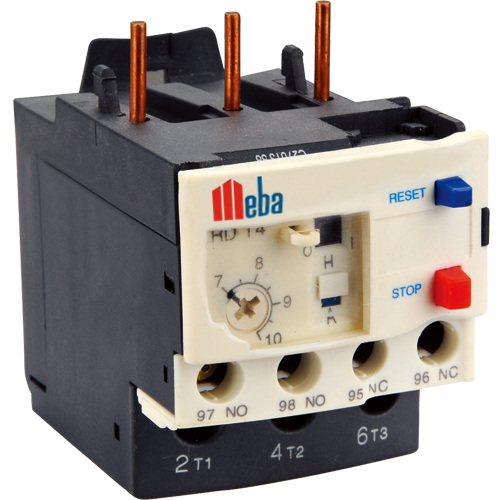
overload thermal relay


Applications of Thermal Overload Relays


Thermal overload relays are commonly used in a wide range of applications, including industrial equipment, motor control centers, and electrical panels. They are typically used in applications where the motor or other electrical device is subject to frequent starts and stops or where there is a risk of overheating due to overloading.


In industrial applications, thermal overload relays are often used in conjunction with contactors to control the operation of motors. Contactors are used to switch the motor on and off, while the thermal overload relay protects against overload and overheating conditions.


overload thermal relay


How Does a Thermal Overload Relay Work?


The overload thermal relay works by monitoring the temperature of the electrical circuit and disconnecting the power supply if the temperature exceeds a predetermined level. The bimetallic strip in the thermal overload relay is designed to bend at a specific temperature, which is set by an adjustment mechanism.


When the temperature of the circuit rises above the set point, the bimetallic strip bends tripping the switch. It interrupts the flow of current to the circuit. This action protects the circuit from damage due to overheating or overload conditions.


Follow us on Twitter

Saturday, 26 November 2022

Guide on Working Principle of Thermal Overload Relay

A thermal overload relay is a safety device used in manual control circuits. The thermal overload shuts off the heating circuit using an electric motor to control its overheated short circuit when the temperature exceeds the specified threshold. The thermal overload relay will be used if there is a danger of a short circuit or if there are consistently high temperatures in the area where it is positioned.


A thermal overload relay is a type of relay used to guard against overheating in electrical circuits. To keep the motor going, it recognizes when the current has grown enough and opens rather than switching off the circuit's electricity.


overload thermal relay

A thermal overload relay has two contacts, one of which is often open and the other of which is typically closed, to effectively carry out its functions. In this article, the operation of a thermal overload relay will be described.


A relay for overload


An overload relay, a safety device, protects your circuit from damage caused by high-power loads. The relay opens to protect the circuit when the load reaches a certain threshold.


The simplest sort of overload relay switch is a single-pole, single-throw (SPST) switch. This type of relay only has one fixed position and responds to input signals from the load or source with a single step.


overload thermal relay


Before employing a relay, you must first be aware of the type of circuit you are protecting. For instance, it will be far safer to utilize a relay rather than a second tripping switch close to where the cook top cable links to the power cord if you have an electric stove top.


Consider a plug that has many circuits going through it. In that situation; you may also utilize overcurrent protection devices, such as overcurrent fuses or shutters, to safeguard certain circuits against harm brought on by an overload of current from other circuits coming into touch with them at the same time.


According to the concept of thermal expansion, the overload thermal relay is dragged out of the mounting base as it senses a temperature rise and expands. Push-on contacts that close when connections are withdrawn are therefore liberated.


Follow us on Twitter

Exploring Cam Switches: Versatile Components for Electrical Control

Cam switches are essential components in electrical control systems, known for their versatility and reliability. These switches play a cruc...